CNC Milling Service

From prototyping to full production runs. Our 3 axis, 3+2 axis and full 5-axis milling centers will allow you to produce highly accurate and quality parts to meet even your most stringent requirements.

Overview: How CNC Milling works?

The Basics Of CNC Mills

CNC mills are automated cutting machines using a rotating spindle-head to cut away unwanted material. CNC milling machines come in a variety of sizes and different axis configurations. They are mainly utilized to cut harder metals but can work with workpiece materials ranging from plastic and aluminum to stainless steel and titanium.

How Does CNC Milling Work?

Use a multi-point rotating tool to remove material from the workpiece.It starts by fixturing a block of metal or plastic material inside the CNC mill. Using G-code, the CNC machine is programmed to rapidly mill out parts from the block of raw material.Basic mills consist of a 3-axis system (X, Y and Z), which is still one of the most popular and widely used machining processes. In 3-axis machining, the workpiece remains fixed, and the rotating tool cuts along the x, y, and z axes. Meanwhile, most newer mills can accommodate two additional axis, 4-axis CNC machining and 5-axis CNC machining have higher versatility, and they are often used in the production of high-precision parts.CNC milling
The creation of these aforementioned features requires a variety of different milling operations:

  • Surface milling
  • Face milling
  • Angular milling
  • Form milling
  • Profile milling
  • Gear milling, etc.

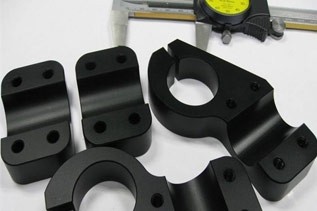
Machined plastic parts are left as-milled, which typically means they show visible tool marks. Some metal parts allow more finishing choices like anodizing and chromate plating. When the run is complete and your required surface finish is applied, parts are boxed and shipped shortly thereafter.

Other Benefits Of CNC Milling

CNC milling machines are built for precise manufacturing and repeatability which makes them perfect for rapid prototyping and low-to-high volume production runs. CNC mills can also work with a variety of materials from basic aluminum and plastics to more exotic ones like titanium — making them the ideal machine for almost any job.

Features of CNC Machining

Advantages

Rapid Turnaround

Using the latest CNC machines, PCBWay produces highly accurate, quick turn parts in as fast as 2 day. We also instantly quote CNC machined parts, cutting days off of your RFQ process.

High Precision Tolerances

Offers high-precision tolerances ranging from +/-0.001″ – 0.005″, depending on customer specs. We are the experts in making parts that are truly custom and ready to use.

Scalability

CNC Machining is perfect for prototyping and production production parts. PCBWay's massive scale can help you scale up from testing phase to production runs of 100,000 parts of more.

Custom Surface Finishes

Suitable for many different kinds of substrates, make your parts just the same as real products.

Material Selection

Choose from over 50 metal and plastic materials. CNC Machining offers a wide variety of certified materials.

Cost Saving

Low investment in tooling and preparation costs, economical for parts with simple structure.

Drawbacks

Structure Limits

Interlocking and hollowed structure is difficult to be machined with CNC.

Scale Effect

The unit cost and lead time will not be reduced as much as injection molded parts.

CNC Milling Processes

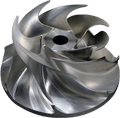
3-axis CNC milling

The most widely used type of CNC milling machine. The full use of the X, Y, and Z directions makes a 3 Axis CNC mill useful for a wide variety of work.
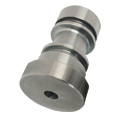
4-Axis CNC machining

This type of router allows the machine to rotate on a vertical axis, moving the workpiece to introduce more continuous machining.
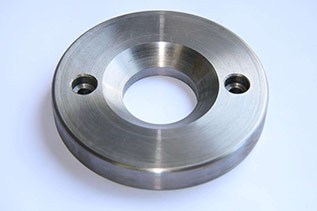
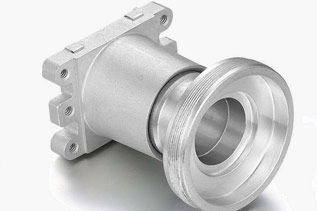
5-Axis CNC machining

These machines have three traditional axes as well as two additional rotary axes. A 5-axis CNC router is, therefore, able to machine 5 sides of a workpiece at in one machine without having to remove the workpiece and reset.
CNC Machining Materials

Aluminum

Steel

Copper / Brass / Titanium / Zinc

Plastics

Others

Custom Sourced Materials

A variety of CNC machined metal and plastic part options are available for an instant online quote. If you do not see the material stock you are looking for, please choose “Custom” under the material drop-down on your quote page and submit for an expert engineering review once you have specified features, tolerances, inspection needs, and quantities required.

Our standard surface finishes

Here is a list of standard surface finishes. For custom surface finishes such as electroplating or polishing.

Aluminum

The finish option with the quickest turnaround. Parts are left with visible tool marks and potentially sharp edges and burrs, which can be removed upon request. Surface finish is comparable to 125 uin Ra finish.

Bead Blast

Abrasive blasting, more commonly known as sandblasting, is the operation of forcibly propelling a stream of abrasive material against a surface under high pressure to smooth a rough surface, roughen a smooth surface, shape a surface or remove surface contaminants.

Requirement

Specification

Anodized (Type II Or Type III)

Type II creates a corrosion-resistant finish. Parts can be anodized in different colors—clear, black, red, and gold are most common—and is usually associated with aluminum. Type III is thicker and creates a wear-resistant layer in addition to the corrosion resistance seen with Type II.

Requirement

Specification

Powder Coat

This is a process where powdered paint is sprayed onto a part which is then baked in an oven. This creates a strong, wear- and corrosion-resistant layer that is more durable than standard painting methods. A wide variety of colors are available to create the desired aesthetic.

Requirement

Specification

Electropolished

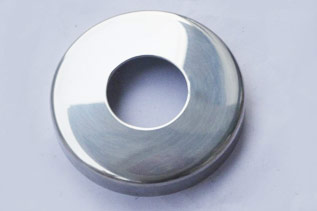
Electropolishing is an electrochemical process used to polish, passivate and deburr metal parts. It is useful to reduce surface roughness.

Requirement

Specification

Brushed

Electropolishing is an electrochemical process used to polish, passivate and deburr metal parts. It is useful to reduce surface roughness.

Requirement

Specification

Size limitations for CNC machining

Item
Part size / dimension

Bring Your Design to Life with Expert 3D Printing!

Aliquam pellen tesque est orci, viverra sodales est congue ut. Praesent vitae turpiso ut felis porta porttitor nec a libero. Maecenas lacinia feugiat sed nisl.

Why We Stand Out

Leading the Way in 3D Printing

Lorem ipsum dolor sit amet, consec tetur adipiscing elit. Nullam non lacusin dolo en. Donec est velit, condimentum vitae tempor eget, pretium et massa. Integero velit de lacinia non turpis at, lobortis tincidunt risus.

Donec pharetra odio a nibh sagittis, eton elementum orci finibus. In pretium dui idon turpis male suadan tempor quis velo se orci donec nisi erat.

“Sed fringilla quam id molestie molo eli lutus. Maecenas diam odio, sagittis am leo sedam, facilisis fermentum.”

John Downey

Product Designer

“Sed fringilla quam id molestie molo eli lutus. Maecenas diam odio, sagittis am leo sedam, facilisis fermentum.”

Sarah Lanny

Project Manager

“Sed fringilla quam id molestie molo eli lutus. Maecenas diam odio, sagittis am leo sedam, facilisis fermentum.”

Michael Rodd

Mechanical Engineer